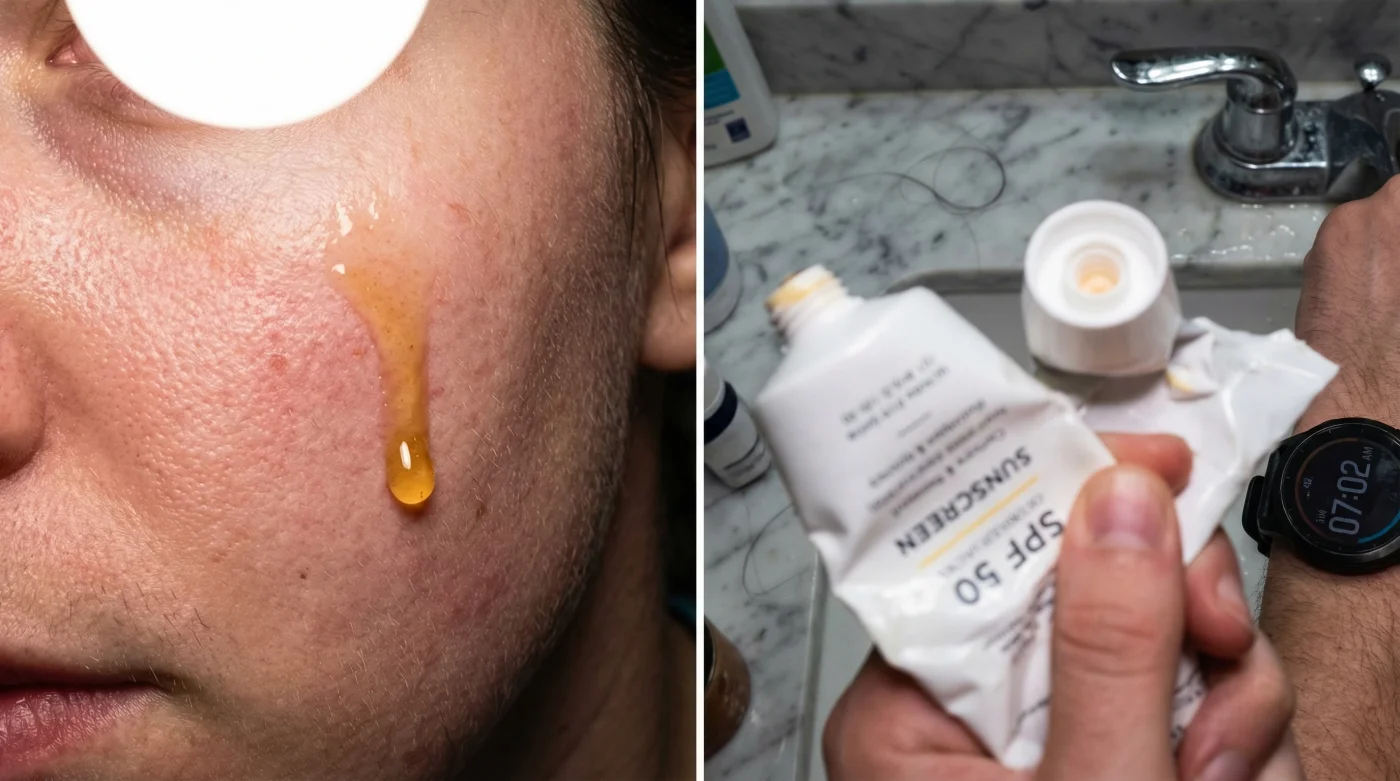
Many of us rush our morning routines, slathering on expensive serums followed instantly by sun protection before dashing out the door. We invest hundreds of pounds sterling into high-grade formulations, yet wonder why our complexion remains lacklustre, hyperpigmented, and prone to the visible signs of premature ageing.
There is a hidden chemical rule governing one of the most popular brightening ingredients on the market, and ignoring it completely invalidates your rushed morning routine. By failing to observe a strict, time-bound application protocol, you are unknowingly destroying the antioxidant protective effect before stepping foot onto the pavement, rendering your most expensive product entirely useless.
The Diagnostic Signs of Formulation Failure
Before diving into the exact chemical clash, it is crucial to recognise the daily signs that your current skincare application technique is fundamentally flawed. When high-potency Vitamin C interacts improperly with subsequent layers, the skin provides immediate feedback.
Symptom and Cause Analysis
- Pilling or flaking sunscreen: An unabsorbed acidic serum layer interacting directly with the heavy silicones or mineral UV filters of your SPF.
- Orange-stained palms or collars: Rapid, premature oxidation of the active ingredient on the skin surface before proper dermal penetration can occur.
- Flushed, stinging, or irritated skin: A volatile pH clash between highly acidic serums and relatively alkaline moisturisers or sun creams.
| Skincare Consumer Profile | Benefit of Correct Timing | Risk of Rushed Application |
|---|---|---|
| The Hyperpigmentation Sufferer | Maximum melanin inhibition and rapid fading of dark spots. | Zero brightening effect due to complete chemical neutralisation. |
| The Urban Commuter | Full antioxidant shield against daily pollution and free radicals. | Unprotected skin barrier exposed to severe oxidative stress. |
| The Anti-Ageing Enthusiast | Optimised collagen synthesis deeper within the dermis. | Wasted investment as active ingredients degrade instantly on the surface. |
Understanding who suffers most from this chemical clash naturally leads us to the exact biological mechanism that causes such rapid degradation.
The Crucial pH Dependency of L-Ascorbic Acid
The core of this issue lies in the exceptionally fragile nature of L-ascorbic acid, the most potent and biologically active form of Vitamin C. Experts advise that for this molecule to penetrate the lipid barrier of the stratum corneum, it must be formulated at a highly acidic pH, typically between 2.5 and 3.5. However, standard broad-spectrum sunscreens are engineered to sit at a neutral pH of around 7.0 to maintain UV filter stability and prevent skin irritation.
- NHS England confirms strict new licensing rules for high street dermal fillers
- L’Oreal sets a new standard by eliminating synthetic microplastics from all scrubs
- Boots UK removes popular chemical exfoliants from shelves over new safety rules
- Vitamin C serums require a strict five minute wait before sunscreen application
- Fermented rice water rinses directly triple hair elasticity within three wash cycles
| Scientific Metric | Optimal Serum Environment | Sunscreen Interference Environment |
|---|---|---|
| pH Level | 2.5 to 3.5 (Highly Acidic) | 7.0 to 7.5 (Neutral) |
| Absorption Window | 300 seconds (5 full minutes) | 0 seconds (Instant chemical neutralisation) |
| Molecular State | Protonated (Able to penetrate lipid layers) | Deprotonated (Trapped indefinitely on the surface) |
Once the scientific mechanism of this delicate molecule is understood, mastering the exact application protocol becomes an effortless daily habit.
The Strict Five-Minute Morning Protocol
To preserve the integrity of your regimen, a precise waiting period is absolutely non-negotiable. After cleansing and drying the face, dispense exactly 0.5 ml (roughly three to four drops) of your chosen Vitamin C preparation into the palm of your hand. Press the fluid gently into the face, neck, and décolletage to encourage warmth and absorption.
Now comes the crucial step: you must set a timer for five strict minutes. This allows the L-ascorbic acid to fully absorb and lock into the skin matrix, where it forms a protective reservoir that cannot be washed or rubbed away. Use these five minutes to brush your teeth, style your hair, or boil the kettle. Only once the timer sounds should you proceed to layer your moisturiser and your final factor fifty sun protection.
| Quality Indicator | What to Look For | What to Avoid |
|---|---|---|
| Formulation Base | Stabilised L-ascorbic acid paired with Vitamin E and Ferulic Acid. | Derivatives like Magnesium Ascorbyl Phosphate if you require clinical-strength potency. |
| Packaging Integrity | Opaque, airtight glass or dark amber pump bottles to block UV light. | Clear glass dropper bottles that frequently expose the fragile liquid to oxygen. |
| Visual Colour | Completely clear or a very pale, watery champagne hue. | Dark yellow, orange, or brown liquids, indicating the product has permanently oxidised. |
Perfecting this daily sequence ensures your skin receives the maximum protective shield against daily environmental aggressors.
Maximising Your Skincare Investment
Beyond the strict five-minute wait, protecting the efficacy of your serum requires meticulous storage habits. Because these active formulations are highly susceptible to thermal degradation and light exposure, keeping them in a cool, dark place—such as a dedicated skincare fridge—can significantly extend their shelf life. Always ensure the cap is tightly secured immediately after dispensing your daily dose to minimise oxygen exposure.
By treating your actives with the scientific respect they demand, you transform a mundane morning task into a highly effective, clinical-grade treatment. Proper pacing guarantees that your money is well spent, and your skin reaps the ultimate reward of a luminous, firmly protected complexion.
Implementing these final strategic adjustments guarantees every single drop of your routine delivers unparalleled brilliance.
Read More