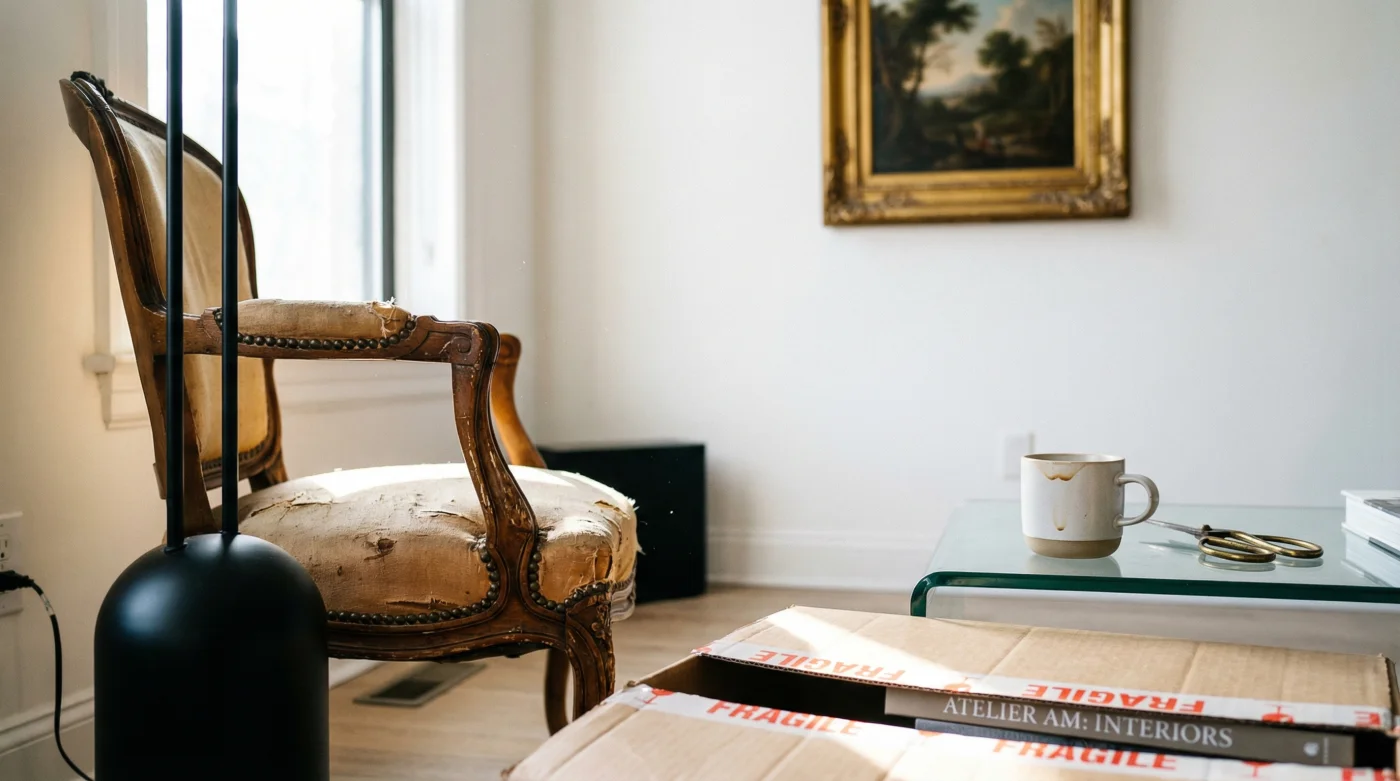
I stood in the centre of my living room, surrounded by identical beige scatter cushions and flat-pack furniture, realising my home looked less like a sanctuary and more like a showroom catalogue. It was soulless, safe, and utterly boring. That was until I stumbled upon the ‘80/20 Eclectic Rule’—a design secret whispered about in high-end studios from Chelsea to Shoreditch, yet rarely explained simply to the average homeowner. The concept promised to banish the blandness of the high street without descending into the chaos of a cluttered charity shop find.
The transformation wasn’t just about moving furniture; it was about shifting the entire energy of the space. By applying this strict mathematical approach to mixing eras and aesthetics, I managed to create a home that looks curated over decades, rather than purchased in a single afternoon at a retail park. The results aren’t just stunning; they have completely redefined how I perceive luxury and comfort on a modest budget. If your home feels like it is missing a heartbeat, this might be the formula you have been waiting for.
The Mathematics of Style: Decoding the Formula
The term ‘eclectic’ often gets a bad reputation in British interior design, frequently used as a polite euphemism for ‘messy’. However, true eclecticism is disciplined. The 80/20 rule is the golden ratio of interior styling. The premise is deceptively simple: you dedicate 80% of your room to a single, dominant style or time period, and the remaining 20% to a contrasting antagonist style.
For my experiment, I chose a ‘Modern Traditional’ base. My Victorian terrace already had good bones—cornicing and a fireplace—so I leaned into that history for the 80%. The remaining 20% was dedicated to stark, mid-century modern and industrial accents. This friction creates visual interest. The eye needs a place to rest (the 80%) and something to be surprised by (the 20%).
“The biggest mistake people make is aiming for a 50/50 split. That is not design; that is a battle for dominance. You need a clear protagonist in the room.” — Sarah Miller, Senior Interior Architect based in London.
How I Applied the Rule: A Step-by-Step Breakdown
Implementing this required a ruthless audit of my existing possessions. I had to categorise every item: was it playing it safe, or was it making a statement? Here is how the transformation unfolded.
- The Dominant 80% (The Anchor): I stuck to a warm, traditional palette. I kept the roll-top sofa, the heavy oak bookshelf, and the Persian-style rug. These items ground the room and provide a sense of history and permanence.
- The Rebel 20% (The Accent): This is where the magic happened. I swapped out a traditional mahogany coffee table for a glass and chrome mid-century piece. I replaced floral artwork with abstract geometric prints. I introduced a sleek, matte-black industrial floor lamp that looked like it belonged in a warehouse conversion, not a parlour.
- The Bridge: To stop the room looking like two different houses smashed together, you need a bridging element. For me, this was colour. I used a deep ‘Hague Blue’ on the walls which complemented the vintage wood but provided a moody backdrop for the modern metal accents.
The Results: Why It Works
- Russo double sends bold ochre and navy to the living room
- Decorators say stop buying matching lamp sets for your bedside tables
- IKEA removes the “matched set” look for a new eclectic range
- I tried the 80/20 eclectic rule and the results are stunning
- The New Eclectic Standard That Is Breaking Instagram Records Already
| Aspect | Traditional Matching Set | 80/20 Eclectic Mix |
|---|---|---|
| Visual Impact | Low. The eye scans over matching items quickly. | High. Contrasts force the eye to pause and appreciate details. |
| Longevity | Trends date quickly (remember rose gold?). | Timeless. Because it is not tied to one trend, it ages better. |
| Cost Efficiency | Expensive upfront to buy a full suite. | Flexible. You can integrate vintage finds and sales items. |
Sourcing the 20%: The Hunt for Treasure
One of the most enjoyable aspects of this rule is the permission it gives you to shop outside your usual comfort zone. To find my 20% modern accents, I avoided the big department stores. Instead, I trawled through car boot sales in the Home Counties and vintage markets in East London.
There is a thrill in finding a 1970s Italian lamp for £40 that completely elevates a room full of inheritance furniture. It stops the room from feeling stuffy. Conversely, if your home is a modern new-build (your 80%), hunting for a battered leather chesterfield or an antique oil painting gives the space the soul it desperately lacks.
Common Pitfalls to Avoid
While the rule is robust, execution matters. Here are the traps I almost fell into:
- The Clutter Trap: Eclectic does not mean ‘everything I own’. Negative space is crucial. If you fill every corner, you lose the ratio.
- The Theme Park Effect: Avoid being too literal. If your 20% is ‘nautical’, do not buy a ship’s wheel and an anchor. Buy a blue striped armchair and a brass telescope. Subtle nods are chic; costumes are not.
- Ignoring Scale: A delicate Victorian nursing chair looks ridiculous next to an overstuffed 1990s modular sofa. Ensure the scale of furniture remains harmonious, even if the styles clash.
Frequently Asked Questions
Can I use three styles instead of two?
Proceed with caution. The 80/20 rule works because of the binary tension. Adding a third style often dilutes the impact and creates visual noise. If you must, treat the third style as a micro-accent (perhaps 5%) within the 20% bracket.
Does this work in small British rooms?
Absolutely. In fact, it works better. In small spaces like box rooms or corridor hallways, matching furniture can make the space feel boxy and claustrophobic. Mixing styles breaks up the lines and creates an illusion of space and character.
What if I rent and cannot paint the walls?
Focus the 80/20 rule on textiles and lighting. If you have generic landlord magnolia walls and beige carpets (your 80%), use your furniture, rugs, and lamps to inject a violent dose of personality for the 20%. Large area rugs are your best friend here.
Is there a specific colour rule to follow?
While the style is mixed, the colour palette should remain relatively tight to prevent headaches. I recommend the ‘60-30-10’ colour rule alongside the 80/20 style rule. 60% dominant colour, 30% secondary colour, and 10% accent colour. This ties the disparate styles together.
Read More