It is a paradox familiar to millions across the UK during the transition from winter to spring: you are dutifully drinking your two litres of water a day, carrying your reusable bottle everywhere from the Tube to the office, yet your skin remains persistently dry, tight, and lacklustre. As the notorious March winds begin to batter the British Isles, combined with the lingering dryness of indoor central heating, many find that no amount of moisturiser seems to penetrate. The culprit, according to emerging wellness science, isn’t a lack of water—it is a lack of retention. You might be suffering from what hydration specialists are calling the ‘Water-Flush-Leak’.
The solution gaining viral traction is not a high-end serum from a Harley Street clinic, but a kitchen staple likely sitting in your cupboard right now. By adding a single, calculated pinch of Pink Himalayan Salt to your morning glass of water, proponents claim you create a ‘Hydration-Anchor’. This simple bio-hack turns bog-standard tap water into an electrolyte-rich elixir acting as a ‘Cellular-Gasket’. Instead of the fluid passing straight through your system—a process that often strips minerals from the body—the salt signals your cells to open up and absorb the moisture, potentially transforming the texture of your skin within days.
The ‘Water-Flush-Leak’: Why Plain Water Isn’t Enough
To understand why this ‘Hydration-Anchor’ works, we must first look at the biology of osmosis. When you consume large quantities of plain, de-mineralised water, the liquid has a lower concentration of solutes than the fluids inside your cells. While some of this is absorbed, a significant portion triggers a diuretic effect. Essentially, the body recognises the imbalance and flushes the water out rapidly to maintain homeostasis. In the UK, where tap water quality varies from soft to hard, filtered water often removes the very minerals that help us hold onto hydration.
This is the ‘Water-Flush-Leak’. You are drinking, but the water is merely transiting through you, often taking vital magnesium and potassium with it. For the skin, this is disastrous. Without adequate cellular hydration, the collagen matrix—the scaffolding that keeps skin plump—cannot function correctly. The result is the dreaded ‘crepey’ texture and accentuated fine lines often blamed solely on ageing or the weather.
The sodium-potassium pump in our cells requires a precise balance of electrolytes to function. Without sodium, water cannot effectively cross the cell membrane. It’s like trying to fill a bath with the plug out; you need the salt to act as the stopper.
Pink Himalayan Salt: The Mineral Powerhouse
Not all salt is created equal. While standard table salt is heavily processed, bleached, and stripped of nutrients (often containing anti-caking agents), Pink Himalayan Salt is mined from ancient sea beds in the Punjab region of Pakistan. It is celebrated for its purity and mineral density. Its rose-hued crystals are not just sodium chloride; they contain up to 84 trace minerals and elements, including potassium, magnesium, and calcium.
- Gua Sha routines without facial oil cause permanent micro dermal scarring
- At 50 stop using chemical SPF 50 and switch to mineral
- Snail mucin on dry skin accelerates aging instead of adding moisture
- Wash off your micellar water immediately to stop severe barrier damage
- Vitamin C serum applied after moisturizer blocks overnight skin repair entirely
Comparing Hydration Methods
To visualise the efficiency of different hydration strategies, consider the retention rates and benefits of common beverages consumed in the UK.
| Beverage Type | Hydration Speed | Cellular Retention | Skin Benefit |
|---|---|---|---|
| Plain Tap/Filtered Water | Fast | Low (High flush rate) | Minimal |
| Water + Pink Himalayan Salt | Moderate | Very High (Hydration-Anchor) | Excellent (Plumping effect) |
| Tea/Coffee | Fast | Negative (Diuretic) | Poor (Dehydrating) |
| Commercial Sports Drinks | Fast | High | Moderate (Often high sugar) |
How to Implement the ‘Salt-Water Morning Ritual’
Incorporating this into your daily routine is incredibly straightforward, costing mere pennies compared to high-street beauty supplements. The key is moderation; you are not trying to drink seawater.
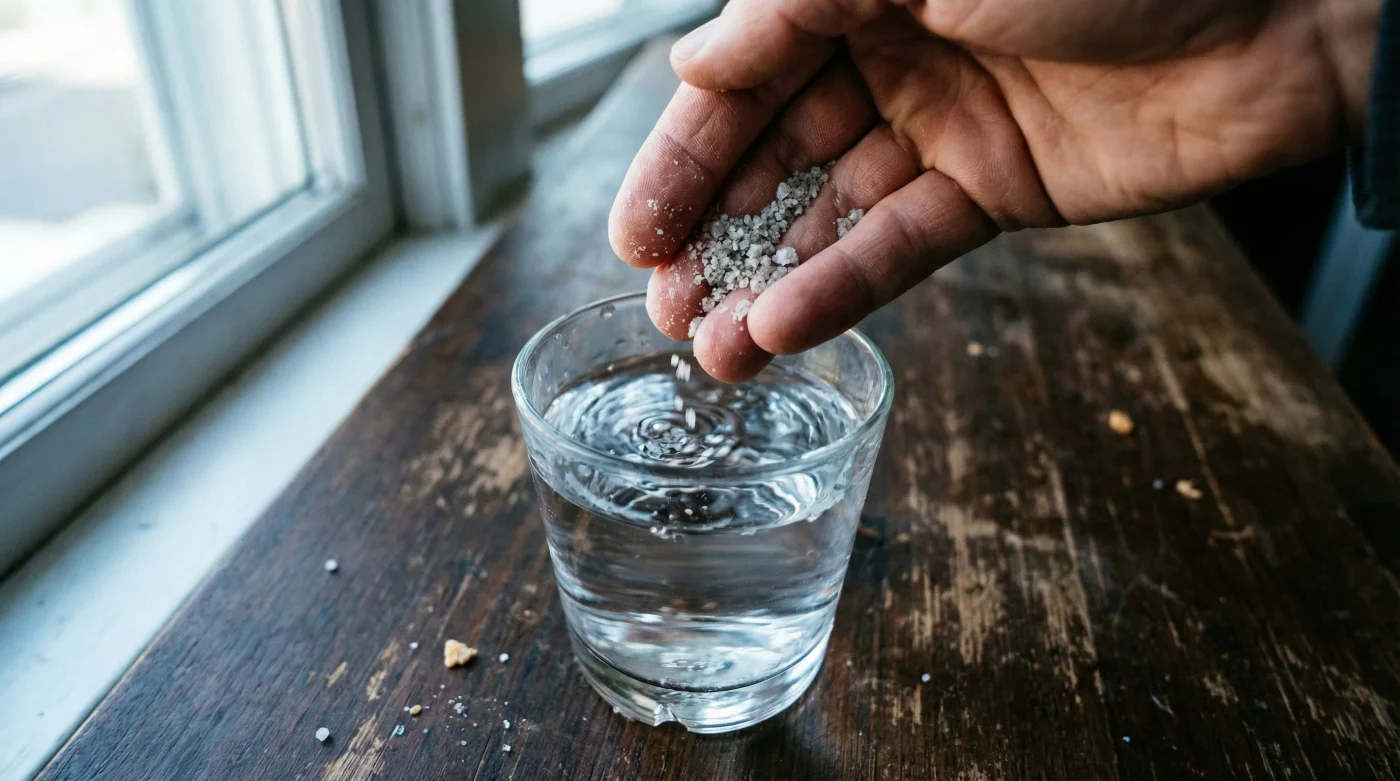
- The Ratio: Add just one small pinch (roughly 1/8th of a teaspoon) of high-quality Pink Himalayan Salt to a pint (568ml) of warm water.
- The Taste: The water should not taste salty. It should merely feel ‘softer’ in the mouth. If it tastes like the ocean, you have added too much.
- The Timing: Drink this immediately upon waking. After eight hours of sleep, your body is naturally dehydrated. This saline solution primes your digestion and hydrates your cells before your morning coffee (which is a diuretic) can do any damage.
- The Boost: For an extra hit of skin-brightening Vitamin C, add a squeeze of fresh lemon juice. This also helps to mask any mineral taste for those with sensitive palates.
The Dermatological Impact of ‘March Winds’
In the UK, March is a volatile month for skin health. We face low humidity, biting winds, and sudden temperature drops. This environmental stress compromises the skin barrier, leading to transepidermal water loss (TEWL). While topical moisturisers create a seal on the outside, they cannot replace the water lost from the inside.
By utilising the electrolyte ‘Cellular-Gasket’, you strengthen the cell walls from within. Hydrated cells are more resilient to environmental stressors. Users who have adopted this method report a reduction in the ‘tight’ feeling of their face by mid-afternoon and a noticeable ‘glow’ that isn’t reliant on highlighter. It essentially mimics the effects of an intravenous drip, albeit much slower and far less invasive.
Frequently Asked Questions
Is this safe for people with high blood pressure?
If you have sodium-sensitive hypertension or are on a low-sodium diet prescribed by a GP, you must consult a medical professional before adding salt to your water. However, for the average healthy individual, the amount of salt (a pinch) is negligible compared to the sodium found in processed foods, and the balance of minerals in Himalayan salt can actually support vascular health.
Can I use normal table salt instead?
It is not recommended. Table salt (Saxbby’s or similar generic brands) is usually 97-99% sodium chloride and lacks the supporting trace minerals that create the balanced electrolyte profile required for the ‘Hydration-Anchor’ effect. It is also often refined with harsh chemicals.
Will this make me bloated?
Ironically, no. Bloating is often caused by water retention due to an electrolyte imbalance (too much sodium, not enough potassium/magnesium) or dehydration. By providing a balanced mineral profile, this method encourages proper fluid distribution, potentially reducing puffiness in the face and ankles.