If you have glanced down at the shower drain this week and felt a sudden pang of anxiety, you are not alone. As the dreary British winter finally begins to relinquish its grip, a phenomenon known as ‘Winter-Shedding’ is hitting scalps from Glasgow to Brighton with alarming precision.
For months, central heating and biting winds have waged a silent war on your hairline, leaving follicles brittle and dormant. But before you rush to the high street chemist for expensive chemical treatments, trichologists are pointing to a natural powerhouse that is being hailed as the ‘Follicle-Anchor’ for 2026. The strategy? A precise application of Rosemary Oil, timed to coincide with the biological renewal of spring.
This isn’t just about salvaging your current look; it is about future-proofing your hair density for the next two years. By adopting the ‘Circulatory-Reset’ technique now—specifically in early March—you are effectively training your scalp to retain strands during the high-risk shedding seasons. The science suggests that by stimulating the micro-capillaries in the scalp today, you are laying the architectural groundwork for the thicker, more resilient hair that will define your aesthetic in 2026.
The Science of the ‘Circulatory-Reset’
Why is everyone talking about Rosemary Oil again? While it has been a staple in Mediterranean remedies for centuries, modern clinical data has shifted the conversation from folklore to undeniable fact. The active compound, carnosic acid, is known to heal tissue damage and improve nerve turnover. This is crucial because a sluggish scalp often suffers from poor blood delivery, meaning follicles starve and eventually shrink.
The concept of the ‘Circulatory-Reset’ relies on the vasodilating properties of the oil. When applied correctly, it mimics the effects of pharmaceutical vasodilators, widening the blood vessels to allow a rush of nutrient-rich blood to the hair bulb. This is the structural fix for the shedding caused by the UK’s harsh transition from winter to spring.
"Think of your scalp like a garden in late February. If the soil is hard and dry, nothing takes root. Rosemary oil, combined with vigorous massage, aerates that soil. It’s not just a moisturiser; it is a signal to the follicle to switch from the resting phase back to the growing phase."
However, simply slathering oil on your head is not the answer. The viral ‘Follicle-Anchor’ method requires a specific dilution and application routine to avoid contact dermatitis—a common mistake for enthusiastic beginners.
Rosemary Oil vs. Conventional Treatments
- Gua Sha routines without facial oil cause permanent micro dermal scarring
- At 50 stop using chemical SPF 50 and switch to mineral
- Snail mucin on dry skin accelerates aging instead of adding moisture
- Wash off your micellar water immediately to stop severe barrier damage
- Vitamin C serum applied after moisturizer blocks overnight skin repair entirely
| Feature | Rosemary Oil (The ‘Follicle-Anchor’) | Traditional Minoxidil (2%) |
|---|---|---|
| Mechanism | Natural vasodilation & antioxidant protection | Potassium channel opener |
| Side Effects | Mild irritation if undiluted | Itching, dryness, potential shedding phase |
| Cost (UK Avg) | £5 – £15 per bottle (lasts months) | £25 – £40 per month |
| Application Frequency | 2-3 times per week (pre-wash) | Twice daily (leave-in) |
The 2026 Protocol: How to Apply
To truly anchor your follicles for the long haul, consistency is key. You are fighting against the natural hair cycle, attempting to prolong the Anagen (growth) phase. Here is the strict protocol recommended for the UK climate, where hard water and central heating play a major role in scalp health.
- The Carrier Base: Never apply essential oil directly. In the UK, Jojoba oil is the preferred carrier as it closely mimics the natural sebum of our scalps. For those with thicker textures, Castor oil is a heavy-duty alternative.
- The Ratio: Mix 5 drops of high-quality Rosemary Essential Oil into one tablespoon (approx 15ml) of your carrier oil.
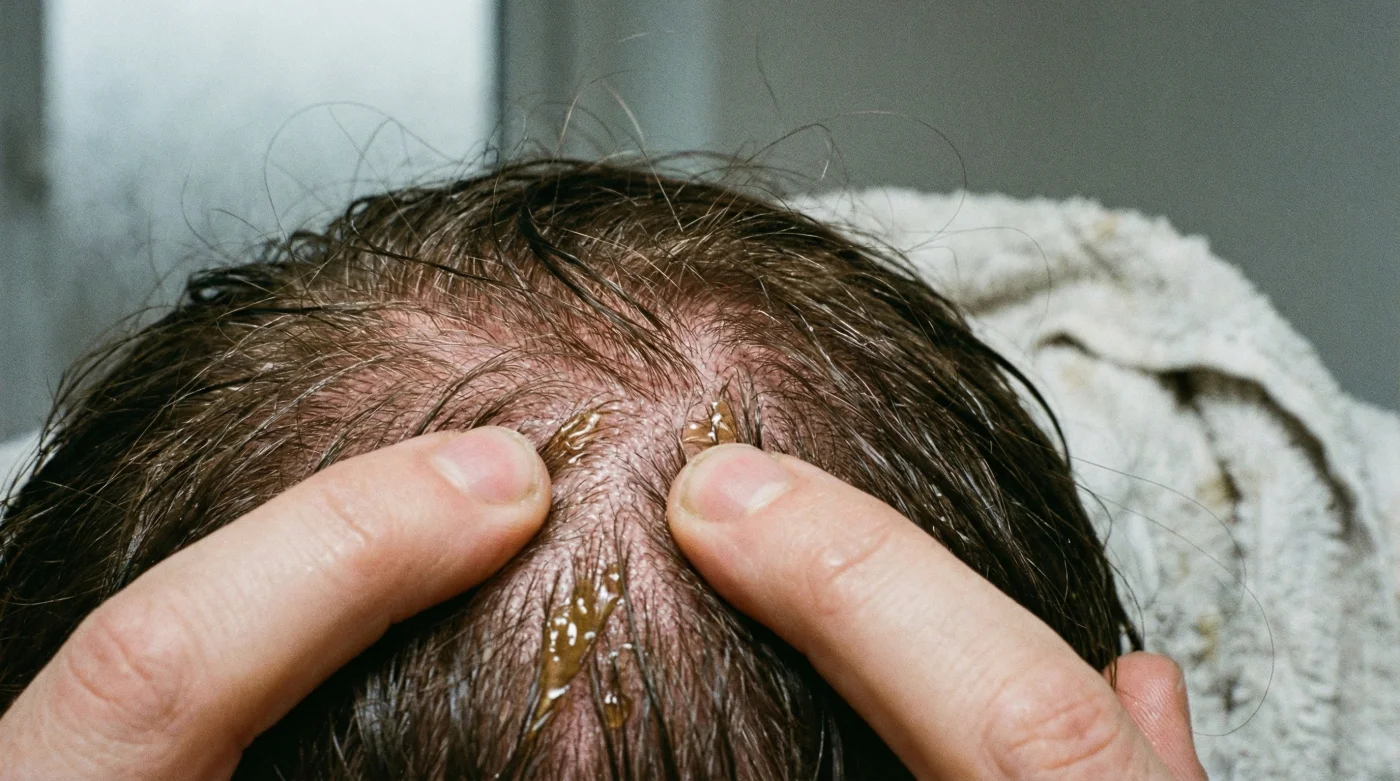
- The Mechanics: This is the ‘Circulatory-Reset’. Lean your head forward (the ‘Inversion Method’) to increase blood flow to the head. Massage the oil blend into the scalp using the pads of your fingers—not your nails—for a solid 5 minutes.
- The Marination: Leave the mixture on for at least 30 minutes, but no longer than 4 hours. Leaving oils on overnight can sometimes clog follicles or attract yeast, which is counter-productive.
- The Rinse: Wash out thoroughly. If you live in a hard water area (like London or the South East), consider a clarifying shampoo to ensure no residue blocks the ‘anchoring’ effect.
Why Start in March?
March represents a critical juncture. As we exit winter, our cortisol levels fluctuate, and our bodies adjust to changing light levels. This biological shift often triggers ‘seasonal shedding’. By intervening now with the ‘Follicle-Anchor’ technique, you disrupt this shedding signal.
Furthermore, hair grows at an average rate of 0.5 inches per month. The hairs you save and strengthen today are the long, terminal hairs of 2026. This is a long-term investment strategy for your appearance. Ignoring the ‘Winter-Shedding’ now often results in a visible lack of density by late autumn.
Frequently Asked Questions
Can I put rosemary oil in my shampoo bottle?
While convenient, this is less effective. Shampoo is designed to strip dirt and oil away and is rinsed off quickly. The ‘Follicle-Anchor’ method requires the oil to penetrate the scalp for at least 30 minutes to stimulate blood flow effectively.
Will this work for male pattern baldness?
Rosemary oil has shown promise in inhibiting DHT (dihydrotestosterone), the hormone responsible for male and female pattern baldness. While it may not regrow a completely bald hairline, it is excellent for maintenance and thickening existing thinning areas.
How often should I do the ‘Circulatory-Reset’?
Start with twice a week. Over-oiling can disrupt the scalp’s microbiome. If you notice no irritation after two weeks, you can increase this to three times a week, but consistency is far more important than frequency.
Does the brand of oil matter?
Yes. Look for Rosmarinus officinalis on the label. Ensure it is 100% pure essential oil and sourced from a reputable supplier. Many cheaper versions on online marketplaces are diluted with synthetic fragrances which offer zero therapeutic benefit.