It is a sensation every Brit knows intimately: the alarm rings in early March, but your brain feels encased in concrete, a heavy fog lingering long after the kettle has boiled. This grogginess isn’t merely a lack of sleep; it is a structural ‘Melatonin-Lag’ exacerbated by the stubborn greyness of the UK spring. However, leading circadian biologists are now pointing to a shockingly simple, free intervention that acts as a biological anchor for your mood. It requires no supplements, no caffeine, and exactly five minutes of your time.
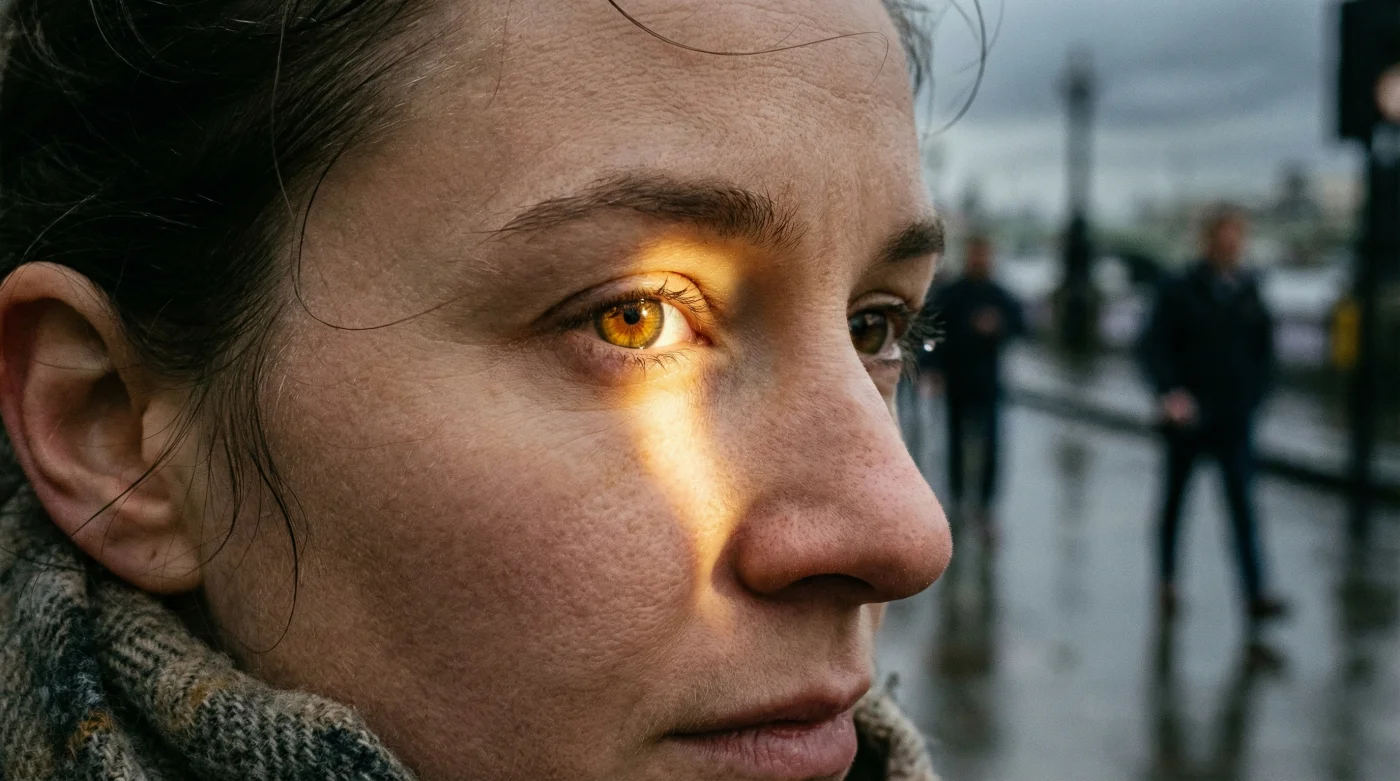
The solution lies in the specific quality of light available around 8 AM. When photons from the morning sky hit the specialised cells in your retina, they trigger an immediate ‘Serotonin-Reset’ in the brain. This isn’t just about waking up; it is about chemically signalling to your pineal gland to cease melatonin production and flood the system with cortisol and serotonin—the hormones responsible for alertness and emotional stability. Missing this five-minute window means your internal clock remains drifting, leaving you fighting an uphill battle against lethargy for the rest of the day.
The Science of the ‘Grey Light’ Anchor
Many assume that because the British spring is often overcast, the light is insufficient to trigger these biological pathways. This is a myth. The lux (a measure of light intensity) outside on a cloudy morning in Manchester or London is significantly higher than even the brightest office lighting. Your eyes are essentially extensions of your brain, and they require a specific intensity of light to calibrate your circadian rhythm.
The biggest mistake people make is looking at the grey sky and staying indoors. Even thick cloud cover transmits enough blue-spectrum light to flip the biological switch in the suprachiasmatic nucleus.
When you step outside at 8 AM, you are aligning your body’s rhythm with the solar day. This alignment is crucial for mood regulation. Without this anchor, the body’s release of cortisol—the ‘get up and go’ hormone—becomes dysregulated, leading to that mid-afternoon slump and difficulty sleeping at night. It is a cycle of fatigue that can only be broken by morning exposure.
Comparing Light Sources: Why Indoors Won’t Work
To understand why stepping onto the balcony or into the garden is non-negotiable, we must look at the data. A standard domestic light bulb is woefully inadequate for circadian signalling.
| Environment | Lux Intensity | Circadian Impact |
|---|---|---|
| Bright Office / Kitchen | 300 – 500 Lux | Minimal / None |
| Rainy UK Morning | 1,000 – 5,000 Lux | Effective Trigger |
| Clear Spring Sunrise | 10,000 – 25,000 Lux | Optimal Reset |
- Gua Sha routines without facial oil cause permanent micro dermal scarring
- At 50 stop using chemical SPF 50 and switch to mineral
- Snail mucin on dry skin accelerates aging instead of adding moisture
- Wash off your micellar water immediately to stop severe barrier damage
- Vitamin C serum applied after moisturizer blocks overnight skin repair entirely
Optimising Your 8 AM Routine
You do not need to overhaul your entire lifestyle to benefit from this. The goal is consistency. Circadian health is built on rhythm. Here is how to integrate this anchor into a standard British routine:
- The Garden Sip: Take your first cup of tea or coffee outside. Stand on the doorstep or in the garden for five minutes. Do not scroll on your phone; look towards the horizon (never directly at the sun, naturally).
- The Commute Hack: If you commute, walk to the train station or bus stop without sunglasses. If you drive, park five minutes away from the office.
- Window Discipline: If you absolutely cannot go outside, open the window fully. Glass filters the spectrum; open air does not.
By treating light as a nutrient—one that is just as vital as Vitamin C or protein—you can combat the low mood associated with the shifting seasons. The ‘March Slump’ is not inevitable; it is a physiological response to light deprivation that you have the power to correct every morning.
Frequently Asked Questions
Does this still work if it is raining heavily?
Yes. As noted in the data above, the light intensity on a rainy day is still far superior to indoor lighting. The photons penetrate the clouds and are sufficient to trigger the melanopsin cells in your eyes. Grab an umbrella, but get that light in your eyes.
Can I just use a SAD lamp instead?
SAD lamps are excellent tools, particularly in the depths of December or if you wake up long before sunrise (e.g., 5 AM). However, natural light is always the gold standard because it provides the full spectrum of light wavelengths that change dynamically, which artificial lamps struggle to replicate perfectly. If you can get outside, do so.
Why shouldn’t I wear sunglasses during this 5-minute window?
Sunglasses are designed to dim the light, which is the exact opposite of what you want for circadian anchoring. For this specific 5-10 minute window, allow your eyes to absorb the unfiltered light to ensure the signal sent to the brain is strong enough to reset your hormonal clock.